The Town That Wasn't Supposed to Be There: How a Clerk's Typo Built a Real American City
The Town That Wasn't Supposed to Be There: How a Clerk's Typo Built a Real American City
America's westward expansion has a pretty heroic origin story in the popular imagination. Brave settlers, manifest destiny, the steady march of civilization across an untamed continent. What that story tends to leave out is the staggering volume of paperwork involved — and what happened when that paperwork went badly, spectacularly wrong.
Because sometimes the march of civilization wasn't a grand plan. Sometimes it was a clerk in a federal land office transposing two numbers, and several hundred people building their lives on the consequences.
The Land Office and the Art of the Mistake
The General Land Office was one of the busiest federal agencies of the 19th century. Its job was to survey, record, and distribute the enormous quantity of public land that the United States was constantly acquiring, organizing, and opening to settlement. This meant processing thousands of land grant applications, matching them to survey plats, and issuing official patents that gave recipients legal title to specific parcels of land.
The system worked on a grid. Every piece of federal land was identified by township, range, and section — a set of coordinates that placed it precisely within a surveyed grid covering the entire country. Get the coordinates right, and the land grant went to the right place. Get them wrong, and the grant went somewhere else entirely. The coordinates were transcribed by hand, checked by clerks who were often overworked and underpaid, and mailed out to recipients who had no easy way to verify that the numbers matched the land they thought they were getting.
At some point in the mid-19th century, a clerk processing a land grant application made exactly this kind of error. Two sets of survey coordinates — township and range numbers — were transposed. The intended recipient's grant, which should have covered a parcel in one region, was officially recorded as covering a stretch of wilderness hundreds of miles away. The patent was issued. The paperwork was filed. And the mistake went unnoticed.
Settlers Who Didn't Know They Were Squatting
Here's where it gets genuinely strange. The misdirected grant covered land that was not entirely uninhabited — or at least, not uninhabited for long. In the fluid, fast-moving world of frontier settlement, word traveled about available land. Settlers looking for opportunity headed toward parcels that appeared to be opening up, and when a federal land grant covered a stretch of territory, that was often enough of a signal that the land was accessible.
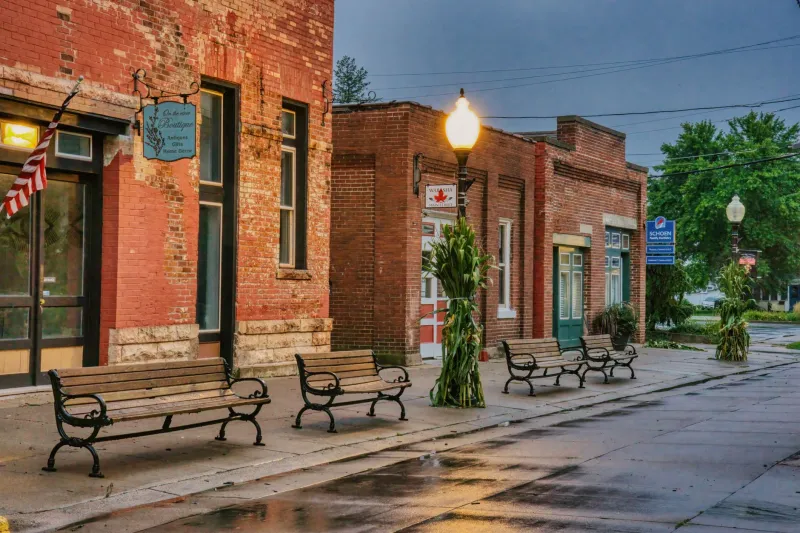
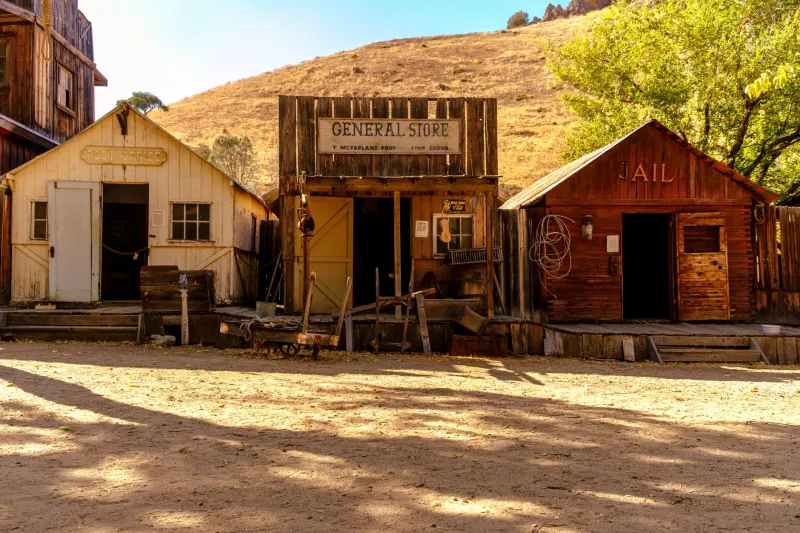
The settlers who arrived at the accidentally granted parcel had no reason to suspect anything was wrong. They had heard the land was available. They came, they claimed plots, they built. Within a relatively short period, a functioning community had taken root: houses, a general store, a church, the basic infrastructure of a frontier town. People had invested their savings, their labor, and their futures into this place.
They had, without knowing it, built on land that legally belonged to someone else — or more precisely, on land whose ownership was the product of a typo.
The Moment Someone Did the Math
The error surfaced the way these things usually did: through a dispute. When the intended recipient of the original grant — or their heirs, or their legal representatives — eventually tried to locate, sell, or develop the land described in their patent, they ran into the mismatch. The coordinates in the document didn't match the land they believed they owned. A surveyor was consulted. The records were pulled. And somewhere in the comparison of numbers, the transposition became visible.
What followed was the kind of legal tangle that made 19th-century land law so reliably chaotic. There was now an official federal patent pointing to land that had a whole town on it. The people living in that town had built in good faith. They had no idea they were sitting on contested ground. The original intended recipient had a legal document that was, technically, their property — except it described land they had never intended to own and had no particular use for.
And in Washington, someone had to figure out what to do about a community of real people whose entire existence was the downstream consequence of a clerical error.
Congress to the Rescue (Sort Of)
The solution, when it came, was a piece of retroactive legislation — the kind of congressional action that essentially says: this shouldn't have happened, but it did, and we're going to make it official anyway. Congress passed a bill legitimizing the settlers' claims, granting them legal title to the land they had occupied in good faith, and compensating or otherwise resolving the situation for the original patent holder.
It wasn't the first time Congress had done something like this. The history of American land law is littered with retroactive legitimizations, private relief bills, and quiet legislative fixes for problems that arose when the federal land system collided with human reality. But this case had a particular quality to it: an entire town, a real community with real people, owed its legal existence to the fact that a clerk had written two numbers in the wrong order.
The Bigger Picture Behind the Typo
There's a version of American history that treats the settlement of the West as an orderly, intentional process — surveys first, then settlers, then towns, then statehood, step by logical step. The reality was considerably messier. People moved faster than paperwork. Settlements appeared before surveys were finished. Towns grew up on land whose ownership was genuinely unclear, and the federal government spent decades retroactively sorting out what had happened on the ground.
The town built on a transposed coordinate is an extreme version of that story, but not an alien one. It's the westward expansion myth stripped of its romanticism and replaced with what was actually there: ambition, confusion, a lot of mud, and a filing error that changed the map.
Somewhere in America, there is a city — with streets and history and people who were born and died there — that exists because a clerk got tired, or got distracted, or just wrote the wrong number. Reality, it turns out, doesn't always wait for the paperwork to be right.