She Found a Roll of Film in a Thrift Store Bin. The Photos Inside Got Her Arrested.
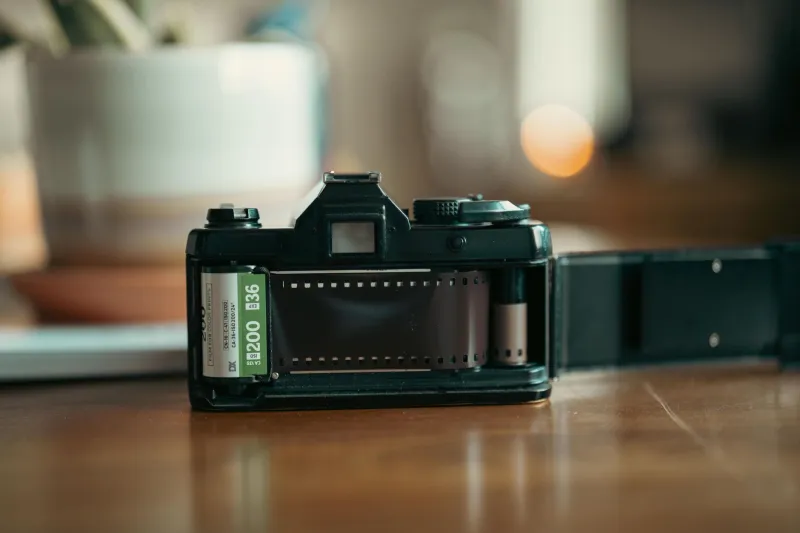
Most people dig through thrift store bins hoping for a vintage jacket or a first-edition paperback. Diane Krueger — not the actress, just an unlucky woman from rural Ohio — was hoping for a cheap camera to give her teenage daughter. What she found instead was a roll of undeveloped film tucked inside a used 35mm camera she paid four dollars for. And what was on that film would upend her life for the better part of two years.
This is the kind of story that makes you question whether doing the right thing is ever actually the right thing.
A Roll of Film Nobody Was Supposed to See
Krueger developed the film herself, the way people still did in the late 1990s when this story unfolded. She had a darkroom setup in her basement — a hobby she'd kept up since college — and developing a mystery roll felt like a fun Saturday project. The first several frames were unremarkable: a backyard barbecue, a dog, what looked like a family gathering at a lake.
Then the last eight frames came up.
The images were dark and grainy, taken in low light, and they showed what was unmistakably a crime scene. A woman's body. A specific location that Krueger didn't recognize. Items arranged around the scene in a deliberate pattern. She sat in her basement for a long time before she called anyone.
She called the police.
The Cold Case Nobody Remembered
What Krueger didn't know — what she couldn't have known — was that the photographs matched an unsolved murder case from 1987. A woman named Carol Anise Fretton had gone missing from a small town about forty miles away. Her body had been found three weeks later in a wooded area, and the case had gone cold almost immediately. The detective who originally worked it had retired. The files had been transferred twice between county jurisdictions. By the time Krueger walked into the sheriff's department with her envelope of developed photographs, most of the officers on duty had never even heard Fretton's name.
The ones who had heard of it, though, knew something important: certain details about the crime scene had never been released to the public. The arrangement of items around the body. The specific location of certain evidence. These were the kinds of details that only the killer — or an investigator — would know.
And here was this woman, a civilian, handing over photographs that showed all of it.
The Suspect Nobody Expected
Krueger was detained the same afternoon she walked in. Detained is the polite word. She was held for questioning for eleven hours, during which time investigators tried to work out how she could possibly have those photographs without having been present at the scene herself. The timeline didn't help her case: the camera she'd bought was a common model, the film stock was no longer manufactured, and she had no receipt from the thrift store to prove when she'd purchased it.
"They kept asking me to explain things I had no explanation for," she later told a local newspaper. "I just kept saying, I found a camera. That's all I did. I found a camera."
She was released but told not to leave the county. For the next several weeks, investigators dug into her background, her connections, her whereabouts in 1987. She had been nineteen years old when Carol Fretton was murdered. She had no criminal record. She had never lived anywhere near the town where Fretton disappeared. None of it pointed toward her.
What eventually cleared her was the camera itself.
The Camera Tells Its Own Story
Forensic examination of the 35mm camera revealed something investigators hadn't initially considered: the serial number traced it to a camera repair shop that had closed in 1993. The shop's records — miraculously still in storage with the former owner — showed the camera had been brought in for servicing in 1989 by a man whose name appeared in the original Fretton case file. Not as a suspect. As a witness who had been interviewed once and then never followed up with.
That man had died in 1996. His belongings had been donated to various thrift stores across the county by his estate. The camera, apparently still loaded with film he had never developed, had sat in a bin for three years before Krueger found it.
Why he had photographs of the crime scene was a question that could never be fully answered. What investigators came to believe — based on additional evidence that emerged once they started looking at him seriously — was that he had not been a witness at all.
The case was officially reclassified. Carol Fretton's family, who had spent twelve years without answers, finally had something to hold onto.
The Part That Still Doesn't Sit Right
Krueger was never formally apologized to by the sheriff's department. She was never charged, but she was never quite exonerated in any official sense either — there was simply a quiet acknowledgment that she was no longer a person of interest, communicated through her attorney rather than in person.
She stopped doing her own film development after that. She also stopped shopping at thrift stores for a while, which is probably the most understandable detail in this entire story.
The case is a strange reminder that doing the right thing doesn't come with a guarantee. Krueger stumbled onto something real, handed it over in good faith, and spent months being treated like a criminal for it. The truth came out eventually — it usually does — but the road to get there ran directly through her.
Somewhere out there, right now, there's probably another roll of undeveloped film sitting in a camera at the bottom of a thrift store bin. Whether you should develop it is, honestly, a personal decision.