She Bought the House for the Kitchen. She Got 10,000 Love Letters Sealed Inside the Walls.
Most people who inherit old houses inherit problems. Sagging foundations, asbestos insulation, plumbing that predates indoor plumbing being a reasonable idea. What they almost never inherit is evidence of a secret. A real one. The kind that was deliberately hidden, wrapped in twine, and sealed behind plaster sometime around the Second World War — then left there, untouched, for the better part of a century.
That's what happened to a woman we'll call Margaret, because she asked that her full name not be used in press coverage, which, honestly, is a reasonable thing to want when you've accidentally become the custodian of a dead stranger's most private feelings.
The House That Had Been in the Family
The farmhouse had belonged to Margaret's great-aunt, a woman she'd met only a handful of times as a child. When the great-aunt died in her late eighties, the house passed to Margaret — the only family member who'd expressed any interest in keeping it. She drove out to the property in western Pennsylvania expecting to spend a weekend assessing what needed to go and what could be saved.
The kitchen, she later told a local reporter, was the thing that sold her on keeping it. Original wide-plank floors. A cast-iron range that still worked. The kind of bones that people in home renovation shows cry about finding.
The walls, it turned out, had their own kind of bones.
What Was Inside
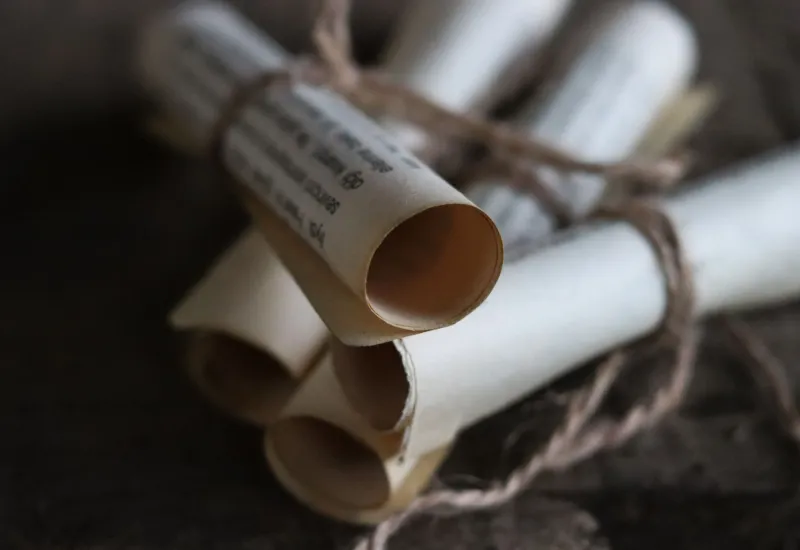
The discovery happened during a renovation project about eight months after Margaret took ownership. A contractor cutting into an interior wall to update the electrical wiring hit something unexpected about fourteen inches in — not a beam, not old insulation, but a dense, bundled mass of paper, wrapped tightly in waxed cloth and bound with what had once been kitchen twine.
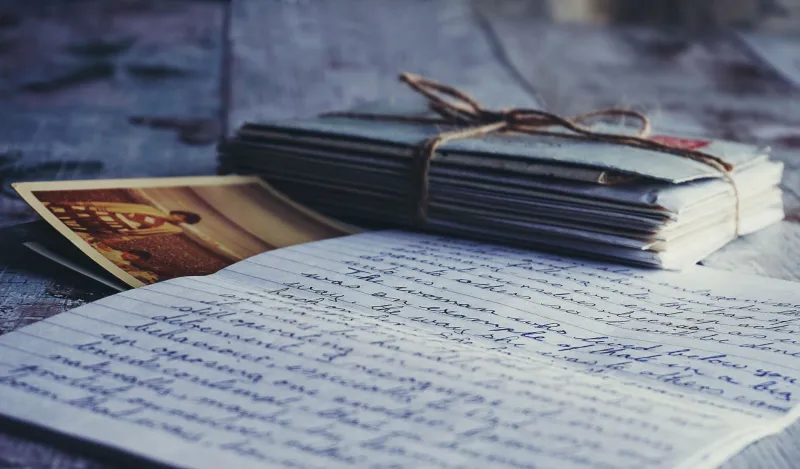
The first bundle contained letters. Dozens of them. Handwritten, in a careful, slanted script, on paper that had yellowed but held together remarkably well thanks to the waxed cloth wrapping. The contractor found more bundles further down the wall cavity. Then more in the adjacent wall. Then more in the wall on the other side of the room.
By the time the renovation stopped and the careful extraction began, Margaret and her contractor had recovered somewhere between 9,800 and 10,200 individual letters — the count varied depending on how you defined a "letter" versus a folded note — spanning what appeared to be a correspondence that ran from approximately 1921 to 1958.
All of them were addressed to the same person. None of them had ever been mailed.
The Story Inside the Story
Reading through the letters — which Margaret did, slowly, over the course of several months — revealed a relationship that had apparently existed in complete secrecy for nearly four decades. The writer, based on context clues in the letters, was a man who had grown up near the property and had known the woman who eventually became Margaret's great-aunt since they were both teenagers.
The letters were love letters, unmistakably. But they were also something more than that — they were a running account of a life. The writer described his work, his frustrations, the small daily textures of existence in rural Pennsylvania across four decades. He mentioned national events in passing: the Depression, the war, the postwar boom. He described aging, illness, loss. Through it all, the letters were addressed to a woman he clearly adored and apparently never stopped thinking about.
What the letters didn't explain — and what Margaret has never been able to fully determine — is why they were never sent, and why they were hidden in the walls of the very house where the woman he was writing to actually lived.
One theory, which a local historian helped Margaret develop, is that the man may have written the letters as a private practice — a way of maintaining an emotional connection with someone he couldn't be with openly, possibly due to a prior marriage or family circumstances that made a relationship impossible. The hiding of the letters in her walls, rather than his own home, may have been a final act: leaving them with her, literally inside her house, even if she never knew they were there.
Or she knew exactly where they were.
The Part Nobody Can Explain
Here's the detail that makes this story genuinely strange, beyond the obvious strangeness of finding ten thousand letters in a wall: Margaret's great-aunt lived in that house until she was eighty-seven years old. She supervised at least two separate renovation projects on the property during her lifetime. She had contractors in and out of that house for decades.
The walls were never opened.
Maybe that was coincidence. Maybe the specific walls that held the letters were never flagged for work. Or maybe a woman who'd spent her whole life keeping a secret knew exactly which walls to leave alone.
What Happens to Ten Thousand Letters
Margaret donated the collection to a Pennsylvania historical society, which has been working to catalog and preserve them. A small exhibit ran in 2022. The letters have attracted interest from researchers studying private correspondence and social history, though the identities of the writer and recipient have been kept out of public records at Margaret's request.
The kitchen still has the original cast-iron range. Margaret kept the house.
Some things, she said, you don't walk away from.