He Boarded a Routine Flight and Ended Up Fighting to Keep It in the Air
Most people, when they think about a bad flight, are talking about turbulence over Kansas or a crying infant in row 14. Gerald Meacham was not most people. On a Tuesday morning in the fall of 1979, he boarded what he expected to be a forgettable domestic hop and wound up, entirely by accident, becoming one of the most unusual figures in American aviation history.
He didn't ask for any of it. He just needed to get somewhere.
The Wrong Seat at the Right Moment
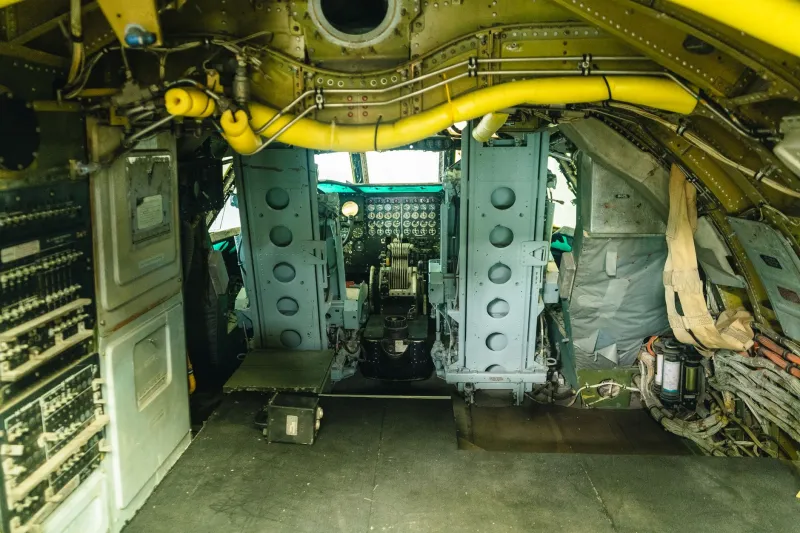
Meacham was a mid-level manufacturing consultant from Ohio — the kind of guy who logged enough miles to earn upgrades but not enough to be recognized at the gate. On this particular flight, a scheduling quirk left him ticketed in the jumpseat, a fold-down crew-adjacent seat typically reserved for off-duty pilots or airline personnel catching a ride. It wasn't glamorous, but it was a seat, and he had a meeting to make.
What he didn't know was that the aircraft — a commercial narrow-body carrying 94 passengers — had a developing hydraulic problem that the flight crew had been monitoring since pushback. It was the kind of thing that, under normal circumstances, gets flagged, handled, and resolved before anyone outside the cockpit knows it existed. Except this time, the situation didn't resolve. It escalated.
About 40 minutes into the flight, the first officer experienced a sudden incapacitation — the clinical term aviation investigators use when a crew member becomes unable to perform their duties. The captain, now managing both the aircraft and a deteriorating hydraulic situation, was effectively alone at a moment when he needed to be doing three things at once.
Meacham, sitting close enough to watch the instruments, had grown up around small planes. His father had been a private pilot. He wasn't certified, wasn't trained on commercial aircraft, and had absolutely no business being involved in what happened next — but he was there, he was calm, and when the captain needed a second set of hands to maintain communication with air traffic control while he managed the emergency checklist, Meacham stepped in.
What He Actually Did — And Didn't Do
Let's be precise here, because the story has a tendency to get inflated in the retelling: Meacham did not fly the plane. He did not land it. He was not a secret pilot who swooped in and saved 94 lives through heroic stick-and-rudder work.
What he did was arguably stranger and more useful in that specific moment. He held the radio. He read back clearances from ATC. He kept the captain's checklist visible and called out items when asked. For roughly 22 minutes over the midwest, he functioned as a makeshift first officer — not because he was qualified, but because he was present, levelheaded, and happened to know enough about cockpit procedure to be useful without being dangerous.
The aircraft landed hard but safely at a regional airport in Indiana. Emergency vehicles were waiting. Passengers deplaned shaken but uninjured. The first officer recovered. And Gerald Meacham walked off the plane, got into a rental car, and went to his meeting.
He thought it had been a dramatic morning. He didn't quite understand what it had been.
The Part He Didn't Know Until Years Later
The National Transportation Safety Board investigation took nearly two years. When investigators finally pieced together a full account of what had transpired in that cockpit, they realized there was a civilian in the middle of it — someone who had never given a formal statement, whose name appeared only in a single line of the captain's incident notes.
Tracking Meacham down took some doing. By the time an NTSB representative knocked on his door in suburban Columbus, it had been almost three years since the flight. He had never spoken about it publicly. He'd mentioned it to his wife, who thought he was exaggerating.
The investigator reportedly told him, with considerable understatement, that his presence in that jumpseat had been "a significant contributing factor in the successful outcome of the event."
Meacham later recalled that he sat with that sentence for a long time before he understood what it meant.
Why This Story Still Matters
Aviation safety culture in the late 1970s was in a period of serious self-examination. A series of high-profile crashes had exposed problems not just with aircraft mechanics but with cockpit communication, crew resource management, and the way human error compounded under stress. The industry was in the early stages of developing what would become Crew Resource Management training — a sweeping reform of how pilots work together during emergencies.
Meacham's story, quiet as it stayed for years, became a footnote in that conversation. Here was a civilian, untrained and unscheduled, who had instinctively done what the new training protocols were trying to teach: stay calm, communicate clearly, don't overcomplicate.
He gave one interview, to a regional Ohio newspaper, sometime in the late 1980s. He described the experience as "mostly just trying not to make things worse." He said he thought about it sometimes when he flew, which he continued to do for work until he retired.
He was never given a formal commendation. He never sought one. As far as anyone can tell, he spent the rest of his career going to meetings and catching flights, occasionally sitting near the front of the plane, saying nothing about any of it.
Which is, somehow, the strangest part of the whole thing.