He Wore the Collar for 12 Years: The Ex-Con Who Fooled an Entire Diocese
There's a certain kind of con that works precisely because nobody wants to believe it's possible. Impersonate a doctor and someone eventually asks for your license number. Impersonate a cop and a real one eventually shows up. But impersonate a priest? The paperwork is surprisingly thin, the community is built on trust, and the people most likely to catch you are, by profession, inclined toward forgiveness.
That uncomfortable reality is at the center of one of the stranger true stories in American religious history — the case of a convicted felon who forged his way into a Roman Catholic parish and served as its priest for over a decade.
From Cellblock to Sanctuary
The man's path to the pulpit started in the criminal justice system, which is about as unlikely a seminary as you can imagine. While serving time on fraud-related charges — a detail that, in hindsight, should have been a flashing neon warning sign — he participated in a work-release program that gave him access to a local parish as a volunteer. He was personable. He was well-read. He knew how to make people feel heard. Priests noticed his comfort in the environment. Parishioners liked him.
So he made a decision. He wasn't going to leave the church when his sentence ended. He was going to become the church.
Using skills he'd refined before his arrest, he produced a set of forged ordination documents — letters of incardination, seminary transcripts, a certificate of ordination — and presented himself to a diocese in a different state as a fully credentialed Catholic priest looking to serve. The documents were convincing enough. The diocese was understaffed. A new face willing to take on a struggling parish was, frankly, a relief.
He got the job.
Why Nobody Caught On
This is the part of the story that tends to make people uncomfortable, because the answer isn't really about the forger's brilliance. It's about the system's blind spots.
The Catholic Church in the United States does not operate a single centralized background-check database accessible to every diocese. In the decades this man was active, verification of credentials often meant a phone call — sometimes to a number the applicant himself had provided. Dioceses trusted dioceses. If a priest said he'd been ordained in a particular place and had a letter to prove it, the assumption was that the letter was real.
Beyond the paperwork, there was something harder to quantify: he was genuinely good at the job. Parishioners described him as warm, attentive, and spiritually grounded. He visited the sick. He counseled couples. He gave homilies that people remembered. Whatever else he was, he had absorbed enough theology and pastoral practice — whether from his time as a volunteer or from years of dedicated study afterward — to function convincingly in the role.
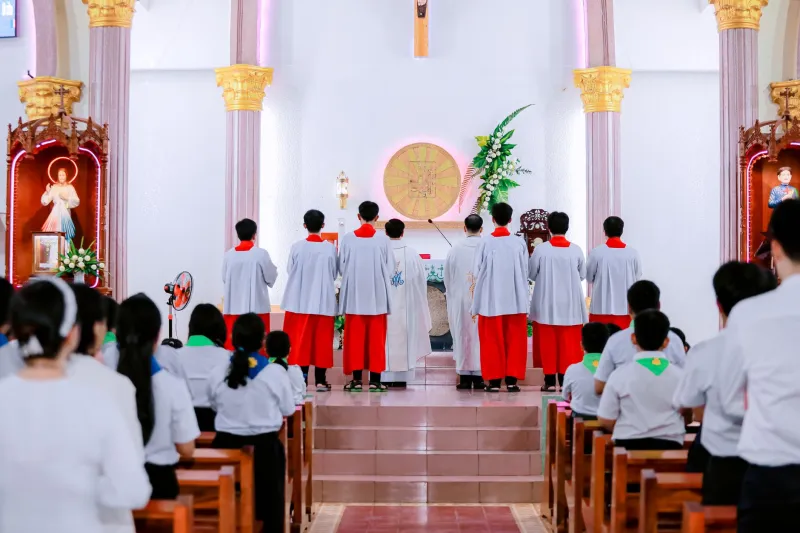
For twelve years, he functioned. Weddings were performed. Funerals were conducted. Confessions were heard. Communion was distributed.
The Unraveling
The end came not through any clever investigative work but through the kind of mundane bureaucratic collision that undoes most long-running deceptions. A records request from another diocese — routine, administrative, the ecclesiastical equivalent of a background check triggered by a transfer application — turned up inconsistencies that a phone call couldn't resolve. When pressed for original documentation, the trail went cold in ways it shouldn't have.
Authorities were notified. His real identity and criminal history surfaced quickly after that.
His arrest made regional news but never quite exploded into a national story, partly because the Church was navigating far more damaging scandals at the time and partly because the legal questions his case raised were genuinely strange enough to slow everything down.
The Legal Puzzle Nobody Wanted to Solve
Here's where it gets philosophically weird.
Prosecutors charged him with fraud, which was straightforward enough. He had forged documents. He had obtained employment under false pretenses. That part was clean.
But what about the sacraments?
Catholic theology holds that certain sacraments — including ordination itself — confer a permanent spiritual character. A priest is a priest. But the Church also holds that ordination requires a valid bishop, a valid ceremony, and the intent of the Church. A forged document doesn't create a sacrament. Which meant that every marriage he'd witnessed, every confession he'd heard, every Eucharist he'd consecrated was, in the eyes of the Church, potentially invalid.
For the couples he'd married, that raised uncomfortable questions. For the dying people who'd received last rites from his hands, their families had to sit with something that had no clean legal or theological resolution.
The Church quietly offered to re-administer sacraments to any affected parishioners who requested it. Most did. Some didn't. A few said, in effect, that whatever he was on paper, the comfort had been real — and that was enough for them.
What It Actually Reveals
The story tends to get filed under 'con artist' and left there, which misses most of what makes it genuinely strange. This wasn't a man who faked his way through something he didn't understand. By all accounts, he understood it deeply. He believed in it, or came to believe in it, or at minimum treated it with the seriousness it deserved.
He was a fraud who became, in some functional sense, the thing he was pretending to be.
That's not a defense. The deception caused real harm — to the institution, to the people whose sacramental records were thrown into question, to the genuine priests whose credentials share space with his forgeries in diocesan files.
But it does raise a question that's harder to answer than the legal ones: at what point does a performance become the real thing? And who, exactly, gets to decide?
The Church had an answer. The courts had an answer. The parishioners who still remember his homilies fondly had a different one entirely.