One Typo, Two Ruined Lives: The Courthouse Mistake That Convicted the Wrong Man in 1930s Georgia
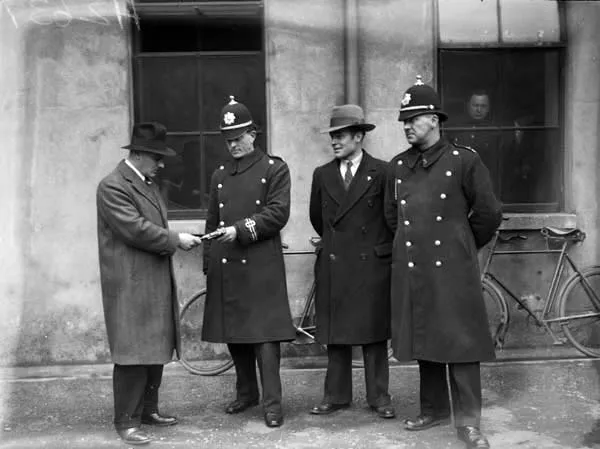
Photo: National Library of Ireland on The Commons, No restrictions, via Wikimedia Commons
The American legal system rests on a foundation of documents. Motions, judgments, writs, filings — thousands of pages generated by every case that passes through a courthouse. The assumption, reasonable enough on its face, is that someone reads them carefully before they become official. In a small Georgia courthouse sometime in the early 1930s, that assumption failed spectacularly.
A typist, working from handwritten notes after a criminal trial, transposed two names on the final judgment paperwork. The defendant's name ended up in the line reserved for the convicted party's attorney. The defense lawyer's name ended up on the conviction. By the time anyone stamped it official, the legal record of the State of Georgia declared that the man who had argued the case in open court was a convicted criminal — and that his client was, somehow, a licensed officer of the court.
The Trial Itself Was Unremarkable
The case, by all accounts, was routine by the standards of Depression-era rural Georgia. A man had been charged with a property crime — the specific details vary depending on the source — and had hired a local attorney to represent him. The trial proceeded normally. The jury deliberated. A verdict was reached. The judge dictated the outcome to the court typist, who set about preparing the official judgment documents.
Somewhere in that transcription, two names got flipped. It's not hard to imagine how. The typist had been listening to a proceeding in which both names were spoken repeatedly, often in close succession. The defendant's name and the defense attorney's name had been bouncing around the courtroom for hours. A momentary lapse in concentration, a line skipped, and suddenly the paperwork said something entirely different from what the judge had intended.
What Happened When the Documents Were Filed
The judgment was filed. Copies were distributed. And for a brief, surreal window of time, nobody noticed.
The first person to realize something was wrong was almost certainly the defense attorney himself, when he received his copy of the judgment and found his own name listed as the convicted party. The account of his reaction has not survived with great clarity, but it's safe to assume it was not calm.
His client, meanwhile, was listed in the official record as the attorney of record — a designation that carried its own legal implications, since practicing law without a license was itself a criminal offense. The man had just been accidentally promoted, on paper, to a profession he had never trained for, in a case where he was supposed to be the one facing punishment.
The Weeks That Followed
Correcting the error turned out to be far more complicated than creating it. In 1930s Georgia, amending an official court judgment wasn't a matter of crossing out a name and initialing the change. It required formal motions, judicial review, and — because the judgment had already been filed and distributed — a paper trail documenting that the original record was in error.
The defense attorney filed an emergency motion almost immediately. The problem was jurisdictional. The judge who had presided over the trial had to formally acknowledge the clerical mistake, but the process for doing so required notifying all parties — including the defendant, who was now listed as an attorney and had his own complicated legal standing in the matter.
For several weeks, both men existed in a kind of legal limbo. The attorney couldn't be formally cleared of the conviction until the amended judgment was certified. The defendant couldn't be formally processed for his actual sentence until the record was corrected. Appeals paperwork referencing the original judgment had to be recalled and reissued. At least one filing from a county office cited the erroneous document as the official record, requiring yet another round of corrections.
The Moment It Was Resolved — and What It Left Behind
The error was eventually corrected, the proper judgment certified, and both men returned to their actual legal identities. The attorney resumed his practice. The defendant served his sentence. The courthouse moved on to the next case.
But the episode left something behind beyond the corrected paperwork. It exposed, in unusually vivid terms, just how much of the American justice system operates on the assumption that documents are accurate. Judges sign them. Clerks file them. Attorneys cite them. Almost nobody goes back to verify that the names match the people.
The typist who made the error was not identified in any surviving record, which is either merciful or convenient depending on your perspective. What survived was the corrected judgment, the amended filings, and a story that courthouse regulars in that county were still telling years later.
One wrong keystroke. Two men's lives, briefly and completely scrambled. And a reminder that in a system built entirely on paperwork, the person most quietly in charge is often the one nobody's watching.