She Wore a Wedding Dress to the Eiffel Tower — and She Was the Bride
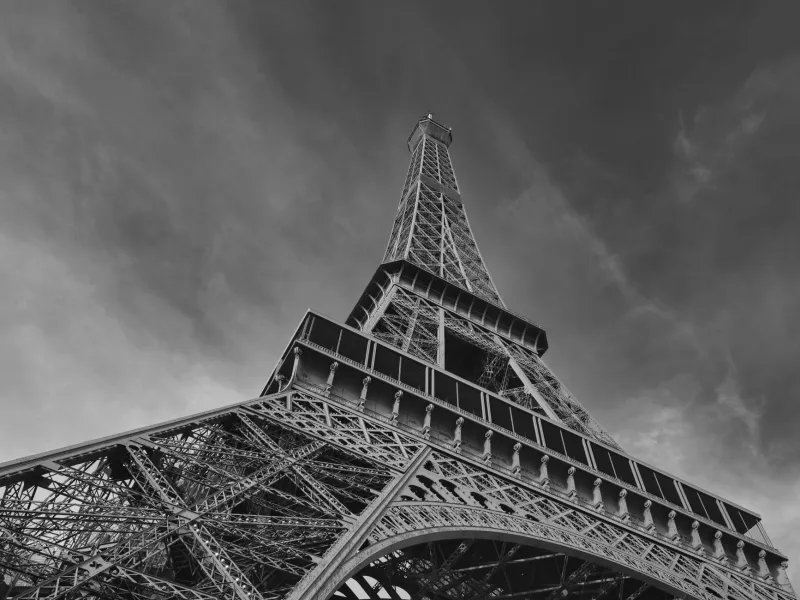
Let's be clear about one thing upfront: this is not a metaphor. There was an actual wedding dress. There were vows. There was a ceremony, witnesses, and a name change. The object of affection was, without ambiguity, the Eiffel Tower — the 984-foot, 7,300-ton iron lattice structure that has stood in Paris since 1889.
In 2007, an American woman named Erika LaBrie stood beneath the tower she had been in a relationship with for several years, married it in a formal ceremony, and changed her surname to Erika Eiffel.
And here's the part that makes this story genuinely worth sitting with: she was completely serious, entirely coherent, and by most measures, a remarkably accomplished human being.
Before the Tower, There Was a Sword
Erika's story doesn't start in Paris. It starts in the United States, where she was a competitive archer — and not casually so. She was a world-class competitive archer, the kind whose precision and focus put her in a league most athletes never reach.
She has spoken publicly about the fact that her relationship with her bow — a specific bow, one she felt a deep and personal connection to — was part of what made her exceptional. The object, to her, wasn't a tool. It was a partner.
This is the part where most people check out, and that's understandable. But bear with it, because the psychology here is more nuanced than it first appears.
Erika is one of the more publicly known individuals who identifies as having objectum sexuality — a term that describes people who experience genuine romantic and emotional attraction to objects rather than people. It's not a joke category. It's not a performance. Researchers have documented it. Psychologists have written about it. And while it remains poorly understood, the experience for those who have it is entirely real.
The Relationship That Became a Marriage
Erika first visited the Eiffel Tower in 2004. By her account, the connection was immediate and unmistakable — the kind of thing she'd felt before with objects she'd been drawn to, but amplified considerably by the scale and presence of the structure.
Over the following years, she returned repeatedly. She learned French. She immersed herself in the history of the tower's construction, its architect Gustave Eiffel, the engineering decisions that shaped every beam and rivet. In interviews, she's described the tower not as a symbol of Paris or romance in the general sense, but as an individual — one with a distinct personality that she came to know deeply.
The wedding ceremony in 2007 was private but real. Guests attended. Vows were exchanged. Erika wore a custom-made wedding gown designed to complement the tower's aesthetic. She changed her legal name.
It's worth noting that no government formally recognizes marriage to an object — in France or anywhere else — so the ceremony was symbolic rather than legally binding in a civil sense. But for Erika, that distinction doesn't diminish it. The commitment, she has said repeatedly, is genuine.
What Science Makes of All This
Objectum sexuality sits in an unusual place in psychological literature. It's not classified as a disorder in the DSM-5, the manual American mental health professionals use for diagnosis. Researchers who have studied it describe it as a sexual orientation — one that falls well outside the statistical norm but doesn't, by itself, indicate dysfunction or distress.
Some researchers have drawn connections between objectum sexuality and autism spectrum traits, particularly around the intense, focused relationships with specific objects that some autistic individuals develop. Erika herself has spoken about this connection in interviews. It's not a universal link, and it's not a complete explanation, but it adds texture to what might otherwise seem like a purely inexplicable phenomenon.
What's clear from documented cases is that people who experience objectum sexuality aren't confused about what objects are. They know the Eiffel Tower is a structure. They know their feelings aren't reciprocated in a conventional sense. The attraction exists anyway, and it's experienced as genuine love — not performance, not provocation.
The Part That Sticks With You
Erika Eiffel went on to co-found OS Internationale, an online support community for people who identify with objectum sexuality. She gave interviews. She participated in documentaries. She became, in some ways, an unlikely advocate for a phenomenon that most people had never heard of and weren't sure how to process.
She also, by her own account, remained married to the tower.
It would be easy to write this story as pure spectacle — the weird thing a weird person did — and move on. But the more you sit with the specifics, the more it resists that framing. Here is a person who identified something true about her own emotional experience, pursued it with full commitment and zero apology, and built a life around it that included community, advocacy, and meaning.
The Eiffel Tower, for its part, has received approximately 300 million visitors since it opened. Erika Eiffel is the only one who showed up with a ring.