The Parody Poem That Almost Became America's National Anthem
Photo: Edward S. Curtis, Public domain, via Wikimedia Commons
The Parody Poem That Almost Became America's National Anthem
By 1929, Congress had been arguing about a national anthem for years. Decades, really. The debate over whether 'The Star-Spangled Banner' should be officially enshrined — or whether America deserved something easier to sing, less militaristic, or simply more dignified — had been grinding through committee rooms and op-ed pages since the turn of the century. It was, to put it charitably, a mess.
 Photo: The Star-Spangled Banner, via i.ytimg.com
Into that mess, entirely by accident, walked a satirical poem written by a Maryland newspaper journalist who thought the whole national anthem debate was profoundly ridiculous. He wrote the poem to say so. And then, through a chain of bureaucratic fumbles that almost defies belief, that poem ended up on a congressional subcommittee's official review list — where it sat, unread by anyone who might have caught the joke, for two full rounds of evaluation.
The Anthem Debate Nobody Remembers
To appreciate how this happened, it helps to understand just how chaotic the national anthem situation was in the late 1920s. 'The Star-Spangled Banner' had been used informally as a de facto anthem for decades, but it had never been formally designated by Congress. A bill to make it official had been introduced, debated, tabled, reintroduced, and debated again across multiple sessions.
Opponents had a long list of objections. The melody — borrowed from a British drinking song, a fact critics loved to point out — was notoriously difficult to sing. The lyrics, written by Francis Scott Key during the War of 1812, struck some as overly martial. Several competing candidates had been proposed over the years, including 'America the Beautiful,' 'My Country, 'Tis of Thee,' and a handful of lesser-known compositions submitted by hopeful composers and civic organizations.
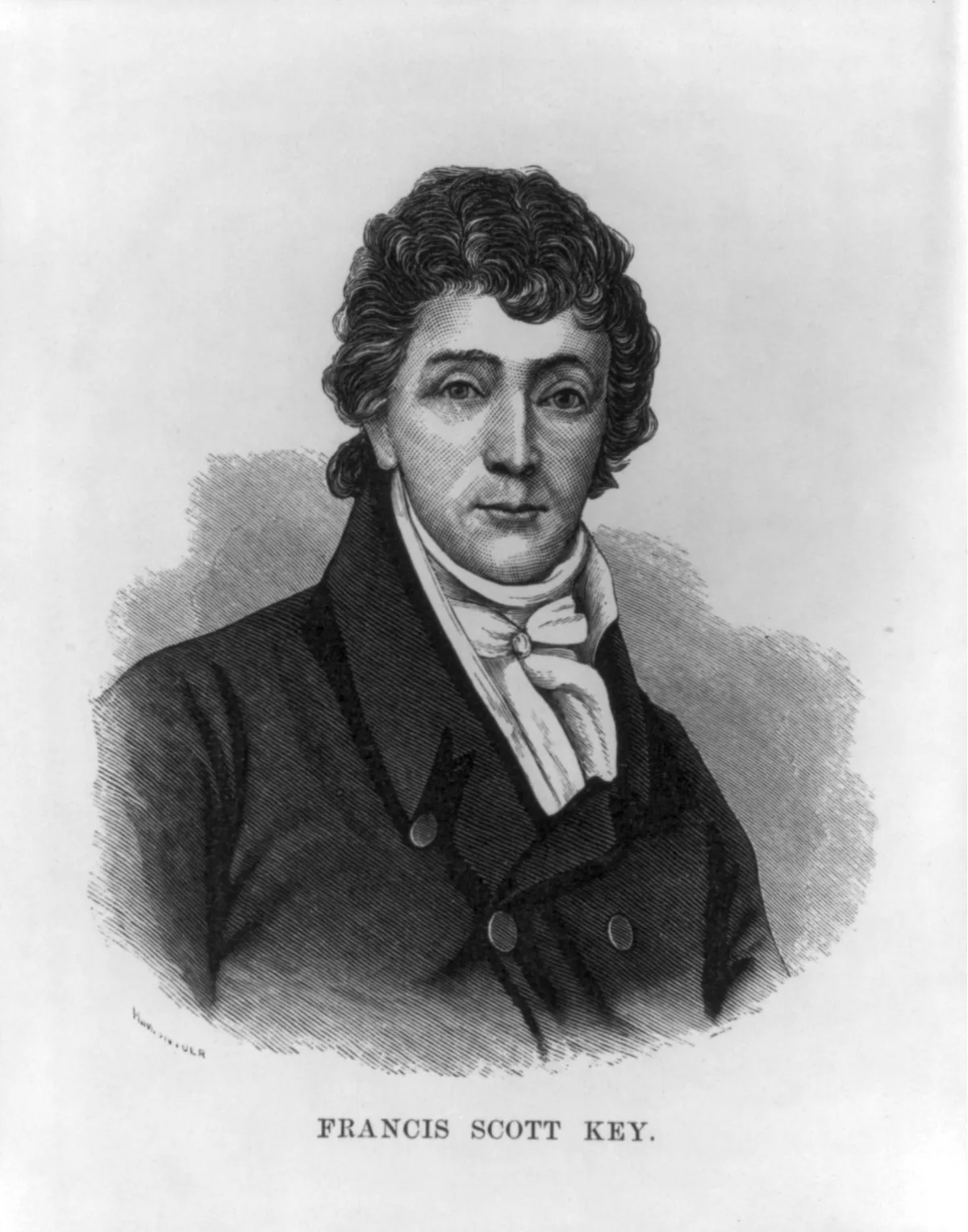 Photo: Francis Scott Key, via www.kennedy-center.org
By 1929, a subcommittee had been tasked with reviewing the full field of submissions and producing a recommendation. The volume of material they were working through was substantial. Which is, almost certainly, how the poem slipped in.
The Journalist and His Joke
The journalist — a Baltimore-area writer whose name appears in different forms across different accounts of the incident — had been covering the anthem debate for his paper and found the entire spectacle exhausting. The earnest submissions, the competing lobbying groups, the congressional grandstanding: he thought it was all a bit much for a country that couldn't even agree on whether its anthem should be singable.
So he wrote a poem. It was, by the accounts of those who later read it, genuinely funny — a mock-patriotic ode that hit every note of overwrought nationalism with enough precision to make clear it was doing so on purpose. References to eagles were overdone. The rhyme scheme was aggressively, almost aggressively, correct. The final stanza reportedly included a line about amber waves of something that was definitely not grain.
He published it in his paper. His readers laughed. And then, apparently, someone who had not read it carefully enough clipped it and submitted it to the congressional review process as a serious candidate.
Two Rounds of Review
The subcommittee was not reading poems for wit. They were reading them for form: Did it scan correctly? Did it have an appropriate number of stanzas? Could it theoretically be set to music? On those narrow technical criteria, the parody poem performed admirably. It had the right structure. It had the right length. It hit the right thematic notes, at least on a surface skim.
It cleared the first round of review. Then the second. At some point it was assigned a formal submission number and entered into the official record of candidates under consideration.
The moment of reckoning came on the Senate floor, when a senator from one of the southern states — the specific identity varies by account — received a copy of the shortlisted candidates and decided to read several of them aloud for the chamber's consideration. He got through two legitimate submissions before he reached the parody.
The silence that followed, by contemporary descriptions, was complete.
The Aftermath and the Anthem
The poem was removed from consideration. The subcommittee moved on. And in March 1931, after more than a decade of on-and-off debate, Congress finally passed a bill officially designating 'The Star-Spangled Banner' as the national anthem of the United States. President Herbert Hoover signed it into law.
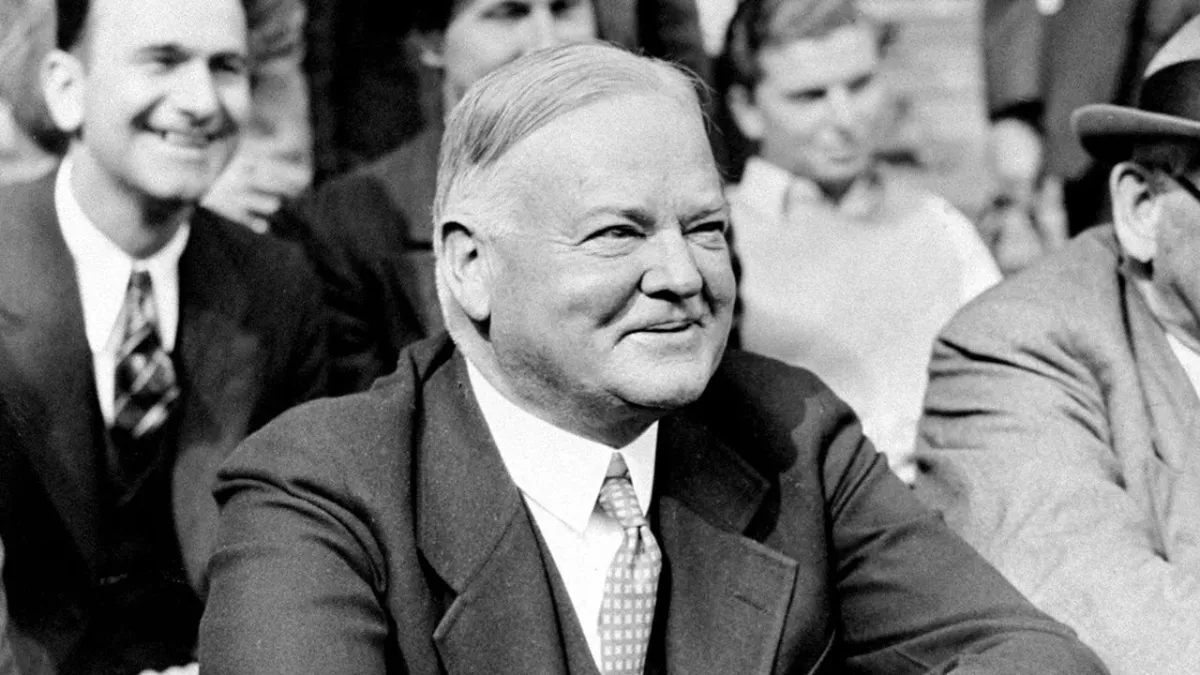 Photo: Herbert Hoover, via static.foxnews.com
The journalist's poem did not become the anthem. But it came closer than any piece of deliberate satire has any right to come to shaping official American culture, and it did so entirely because a congressional review process was operating at the pace and attention level of a government agency in 1929.
The episode has largely been forgotten, buried under the more triumphant narrative of the anthem's eventual passage. But it sits there in the record — a small, ridiculous footnote — as a reminder that American democracy's most solemn proceedings have occasionally been one inattentive staffer away from complete and total absurdity.
The Star-Spangled Banner prevailed. But for a few weeks in 1929, it had some very unexpected competition.