For 40 Years, a Kansas Janitor Secretly Rescued History From the Trash. Nobody Knew Until He Died.
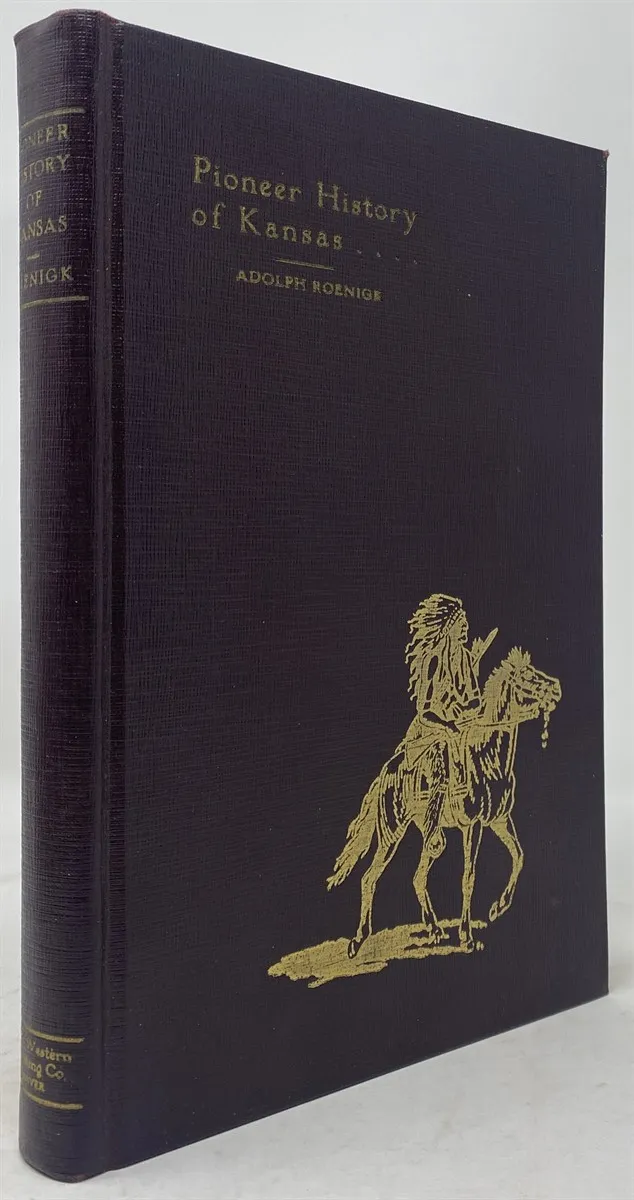
Photo: old pioneer documents photographs ledgers dusty archive Kansas history, via img.btimages.net
Eldon Rhoads was not a historian. He held no academic credentials, attended no archival conferences, and almost certainly never used the word provenance in a sentence. He was a school janitor in a small Kansas town, and for roughly four decades, he did what janitors do: he cleaned up after other people.
The difference was what he chose to do with what he found.
The Quiet Collector
Sometime in the early 1960s, Rhoads started noticing what was being thrown away.
Government offices and schools generate enormous amounts of paper, and periodically they purge it. Filing cabinets get emptied. Storage rooms get cleared. Old ledgers, intake forms, correspondence, and photographs get tossed into dumpsters or burn barrels without much ceremony. To the people doing the purging, this material is clutter — outdated, redundant, taking up space that newer records need.
To Rhoads, apparently, it looked like something worth keeping.
He didn't announce this. He didn't petition anyone to preserve the documents. He didn't write letters to the county historical society or contact the state archives. He simply started pulling things out of the trash and bringing them home.
Over forty years, that habit filled his house.
Neighbors knew Rhoads as a quiet, private man — friendly enough, but not someone who invited people in. His home, a modest property outside of town, was understood to be cluttered. People assumed it was the ordinary accumulation of a lifelong packrat: old furniture, broken appliances, the detritus that collects around a person who finds it hard to throw things away.
Nobody knew about the documents. Not his coworkers, not his neighbors, and apparently not any family members who might have asked questions.
For forty years, Eldon Rhoads kept his collection entirely to himself.
What Historians Found After He Died
Rhoads died in 2003. When the task of clearing his estate fell to the county — he had no close surviving relatives — the people who entered his home were not prepared for what they found.
The documents were everywhere. Stacked in rooms, organized in ways that made sense only to Rhoads himself, stored in boxes and folders and loose piles that covered floors and filled closets. There were photographs — fragile, sepia-toned images of pioneer-era settlers, homesteads, and town gatherings that had no duplicates anywhere else. There were handwritten ledgers from county offices dating back to the late 1800s. There were land records, school enrollment logs, census supplement sheets, and personal correspondence that had somehow survived the purge cycles of a dozen different institutions across multiple decades.
The county initially had no idea what they were looking at. It took the involvement of a state archivist to begin the process of understanding the scope of what Rhoads had accumulated.
The assessment, when it came, was staggering.
The Records Kansas Thought Were Gone
The Kansas State Historical Society had, over the years, documented numerous categories of pioneer-era records as officially lost — destroyed in fires, discarded during office relocations, or simply unaccounted for after decades of institutional turnover. These weren't obscure documents. They were the kind of foundational records that historians use to reconstruct how communities were built, who owned what land, and how the legal and social infrastructure of early Kansas actually functioned.
A significant portion of what Rhoads had collected fell into exactly these categories.
Among the most consequential discoveries was a collection of original land deeds and survey records from the 1880s and 1890s covering a stretch of territory that had been at the center of a property dispute grinding through Kansas courts since 1967. The case — involving competing claims to a parcel of land whose original boundaries had never been definitively established — had stalled repeatedly because the documentary evidence needed to settle it simply didn't appear to exist.
It existed. It had been sitting in Eldon Rhoads's house for decades.
When the relevant documents were identified, authenticated, and submitted to the court, the case — which had outlasted multiple judges, several law firms, and at least two generations of the families involved — was resolved within a year.
The Archivist Who Never Knew He Was One
What do you call someone who spends forty years preserving irreplaceable historical records without telling anyone, without seeking recognition, and without any apparent understanding of the formal significance of what they were doing?
Historians, when they've written about the Rhoads collection, have used the word serendipitous a lot. That's accurate, but it undersells something. Serendipity implies accident. What Rhoads did required sustained, deliberate effort over four decades. He made a choice — repeatedly, every time he reached into a dumpster — to treat these documents as worth saving.
He just never felt the need to explain that choice to anyone.
The collection, now formally catalogued and housed at a regional archive, contains thousands of individual items. Researchers have used it to fill gaps in the historical record that were previously considered permanent. Photographs from the collection have been reproduced in books and exhibits. The land deed records alone resolved questions that legal professionals had spent years trying to answer through other means.
What Gets Thrown Away
There's a version of this story that's simply charming — the eccentric janitor with the secret treasure trove, the accidental hero of regional history. And it is charming. But it's also a little unsettling.
Because the records Rhoads saved were thrown away by the very institutions responsible for maintaining them. County offices. Schools. Government buildings. Places that, in theory, understood the value of documentation.
They didn't. Or they did, and decided the storage space wasn't worth it, which amounts to the same thing.
Eldon Rhoads, mopping floors and emptying wastebaskets, made a different calculation. He couldn't have known what he was preserving or why it would matter. He just knew it felt wrong to let it disappear.
Forty years later, a court case closed. Historians filled in blank spaces on the map of Kansas history. And somewhere in a regional archive, a collection of rescued documents sits in acid-free folders, properly catalogued at last.
The man who saved them never saw any of it. He was already gone.