She Was Just Counting Death Certificates. Then She Accidentally Caught a Serial Killer.
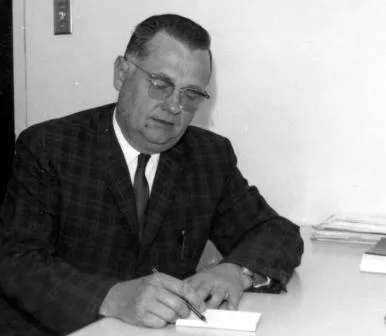
Photo: Mennonite Church USA Archives, No restrictions, via Wikimedia Commons
She wasn't a detective. She wasn't even a nurse. She was a hospital administrator in 1980s Ohio, sitting at a desk stacked with paperwork, doing the least glamorous job in the building: processing death certificates.
And somehow, she saw what nobody else did.
The Numbers That Didn't Add Up
In any hospital, death is a statistical reality. Patients die. Some units see more of it than others — intensive care, oncology, cardiac wards. The numbers fluctuate, and seasoned healthcare workers learn to accept a certain grim baseline. But when you're the person responsible for filing the paperwork, you start to develop an instinct for what those numbers should look like.
This administrator — processing stacks of routine death certificates during the early 1980s — noticed something that made her stop mid-stack. One particular nurse kept appearing on the forms. Over and over again. Far more than any of her colleagues on the same unit, during the same shifts, with comparable patient loads.
She wasn't a statistician. She didn't run a formal analysis. She simply did what any observant person does when a pattern becomes too obvious to ignore: she said something.
Her comment to a supervisor was reportedly casual, almost offhand. Something along the lines of: has anyone noticed how often this nurse's patients are dying?
The answer, apparently, was no. Nobody had noticed. Because nobody had been looking at the paperwork the way she had been.
What Trained Eyes Had Missed
This is the part of the story that sits uncomfortably in your chest. Hospitals have administrators, supervisors, department heads, and credentialing committees. They have peer review processes and mortality reviews. The entire infrastructure of modern healthcare is designed, in part, to catch exactly this kind of anomaly.
And yet it took a clerk doing data entry to sound the alarm.
When investigators were eventually brought in, they were initially skeptical. A worried bureaucrat noticing a statistical blip — that's not exactly a smoking gun. The medical establishment has a long history of dismissing administrative staff as outside the clinical hierarchy, people who push paper but don't understand the complexity of patient care. Surely there was an explanation. Surely the patients were simply sicker. Surely the shift assignments explained the clustering.
Except they didn't.
Once investigators actually ran the numbers — really ran them, with the rigor the situation demanded — what they found was not a blip. It was a statistical impossibility. The mortality rate among this particular nurse's patients was so dramatically elevated that random chance couldn't account for it. Not even close.
The nurse in question was Donald Harvey, who worked at Drake Memorial Hospital in Cincinnati among other facilities. By the time investigators finished their work, Harvey had confessed to killing dozens of patients across multiple hospitals over roughly two decades — making him one of the most prolific hospital serial killers in American history. His method was disturbingly simple: he administered poisons or suffocated patients who were already vulnerable, betting correctly that their deaths would be attributed to their existing conditions.
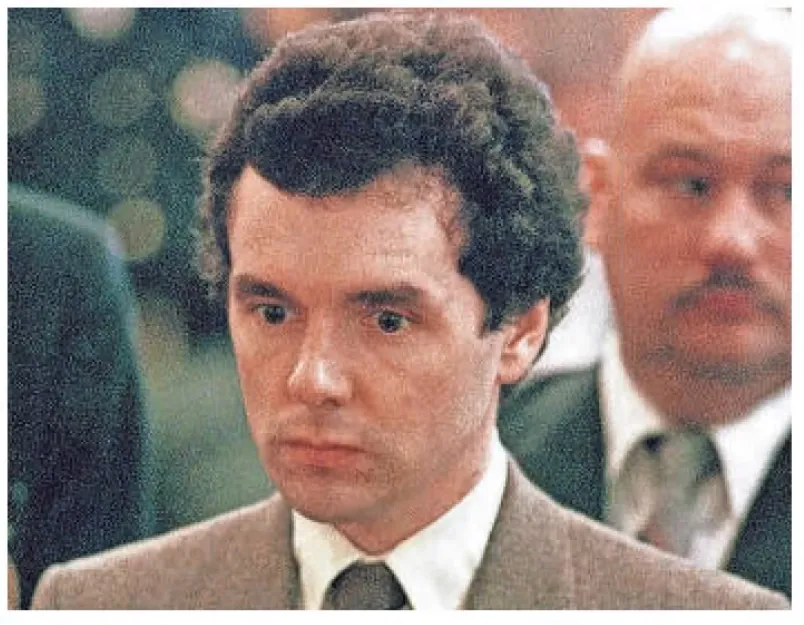 Photo: Donald Harvey, via blogger.googleusercontent.com
For years, they were.
Why Nobody Looked at the Paper
One of the most quietly devastating elements of this story is how long it went undetected — and why. Harvey's victims were largely elderly, chronically ill patients in hospitals where death was not unexpected. Each individual death, reviewed in isolation, appeared plausible. It was only when you stepped back and looked at the aggregate — when you treated the death certificates not as individual tragedies but as data points in a larger picture — that the pattern emerged.
That's not a failure of compassion. Healthcare workers grieve their patients. But grief and pattern recognition are different cognitive tasks. When you're focused on the human being in front of you, you're not running mental statistics on everyone who died during your shift last Tuesday.
The administrator was. Not because she was morbid or suspicious, but because paperwork is, by definition, an aggregating function. You see the stack. You see the names. You see the dates and the attending staff. And sometimes — just sometimes — the stack tells you something no individual document ever could.
The Chilling Power of Paying Attention
Donald Harvey was convicted in 1987 and eventually confessed to 87 killings, though the confirmed number attributed to him varies by source. He died in prison in 2017.
The woman who first raised the alarm never received the kind of recognition that gets names put on plaques. She was doing her job. She noticed something. She said something. In the grand narrative of criminal investigation, that's a footnote.
But here's what makes this story genuinely remarkable: the formal systems designed to catch exactly this kind of pattern failed for years. The informal system — one person paying close attention to numbers nobody else was reading — worked.
There's no dramatic lesson to extract from that. It's just strange, and a little unsettling, and completely true. The paperwork knew. It just needed someone to read it.