Roy Sullivan's Seven-Strike Nightmare: The Only Man to Get Hit by Lightning Again and Again
The Odds Are Literally Impossible
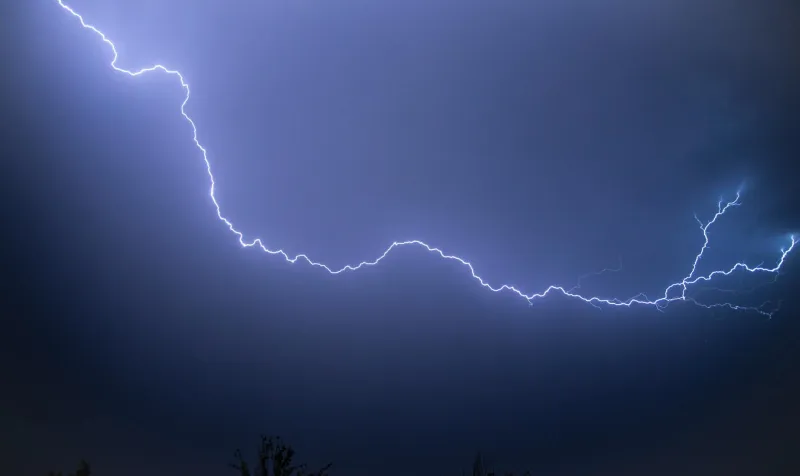
If you asked a statistician to calculate the probability of one person being struck by lightning seven times in their lifetime, they'd probably laugh nervously and change the subject. The odds of being struck even once are roughly 1 in 500,000. Seven times? The numbers stop making sense. And yet Roy Sullivan—a quiet park ranger working in Shenandoah National Park, Virginia—lived through exactly that nightmare.
What makes Sullivan's case so unsettling isn't just the sheer statistical improbability. It's that every single strike was documented. Witnesses saw it happen. Medical records exist. This isn't folklore or an exaggerated bar story passed down through generations. This is real, verified, and deeply, deeply weird.
The First Strike: A Warning He Didn't Recognize
On May 27, 1969, Sullivan was working as a ranger when lightning struck him directly. He survived, walked it off, and went back to work. Most people would have considered this a life-defining moment—a brush with death to talk about forever. Sullivan didn't know it was just the beginning.
Over the next eight years, he'd be struck five more times. Each strike came with injuries: burns, cardiac disruption, singed hair that would grow back only to be singed again. His shoes were repeatedly destroyed. His watch stopped. His wedding ring melted into his finger. Each time, he recovered. Each time, he went back outside.
But the psychological weight was building. Sullivan began to dread storms. He'd watch the sky obsessively, scanning for clouds that might harbor his next encounter with nature's most violent electrical discharge. The man whose job was to protect people in the wilderness had become terrified of the wilderness itself.
Strike Seven: The Breaking Point
The seventh and final documented strike came on June 25, 1977, while Sullivan was fishing—ironically, one of the most dangerous activities during a thunderstorm. This strike was different. It didn't just burn him or disrupt his heart rhythm. Something inside him broke that day.
After surviving seven lightning strikes, Roy Sullivan did something that seems impossible to reconcile with his survival: he took his own life in 1994. The man who had beaten lightning couldn't beat the psychological toll of waiting for the eighth strike that never came.
Why This Matters Beyond Statistics
Sullivan's story isn't just a curiosity for probability nerds (though they love it). His case fundamentally challenges how we think about luck, fate, and the limits of scientific explanation. Lightning strikes are random. They're governed by physics, atmospheric conditions, and chance. Seven times should be impossible. Yet it happened.
Some researchers have theorized that Sullivan's occupation—spending enormous amounts of time outdoors during storm season—increased his exposure. His height might have made him a more attractive target for electricity seeking a path to ground. But these explanations feel insufficient when you actually sit with the numbers. Even accounting for increased exposure, the odds remain astronomical.
What's particularly strange is how Sullivan's case has become almost lost to history. He wasn't famous during his lifetime outside of local Virginia circles. The Guinness Book of World Records acknowledges him, but he's not a household name like other survival record-holders. Maybe that's because his story is too unsettling. It doesn't fit neatly into the "triumph over adversity" narrative we like. Instead, it sits uncomfortably in the space between "amazing luck" and "cosmic cruelty."
The Question That Haunts Us
When you read about Roy Sullivan, you're forced to confront something uncomfortable: the randomness of the universe. We like to believe that extreme events are rare for a reason. That lightning strikes are singular, life-changing moments. Sullivan's story suggests that sometimes, the universe just picks someone and keeps coming back.
What happened to Roy Sullivan was real. It was documented. It was impossible. And it happened anyway. That's the kind of true story that makes you look at the sky during a thunderstorm and think: "What are the actual odds?" Then you remember Roy Sullivan, and you realize the odds might be worse than you thought.