The Mapmaker's Phantom: How One Man Invented Mountains That Never Existed
The Man Who Saw Mountains in Molehills
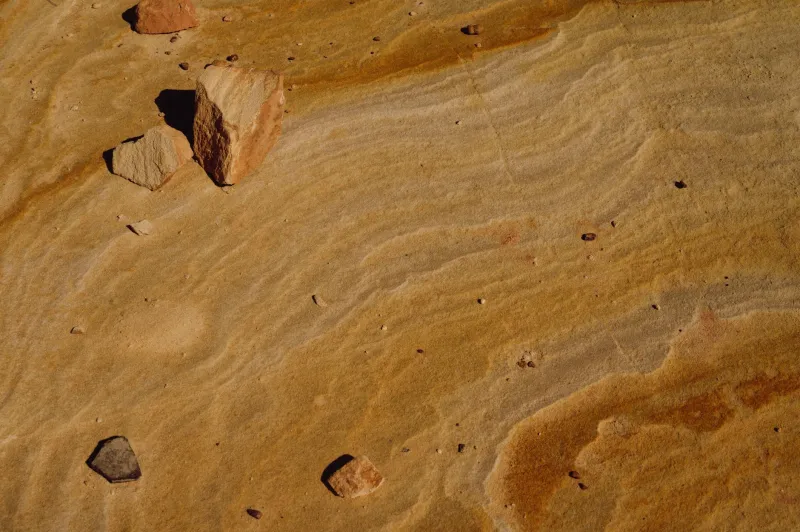
Franklin Morse had been walking through the Arizona Territory for three weeks in the summer of 1889, documenting geographical features for the U.S. Census Bureau's Western Survey project. The heat was brutal, his water was running low, and he was behind schedule. When he crested a ridge and saw a series of rocky outcroppings stretching across the desert landscape, he made a decision that would reshape American geography for three decades.
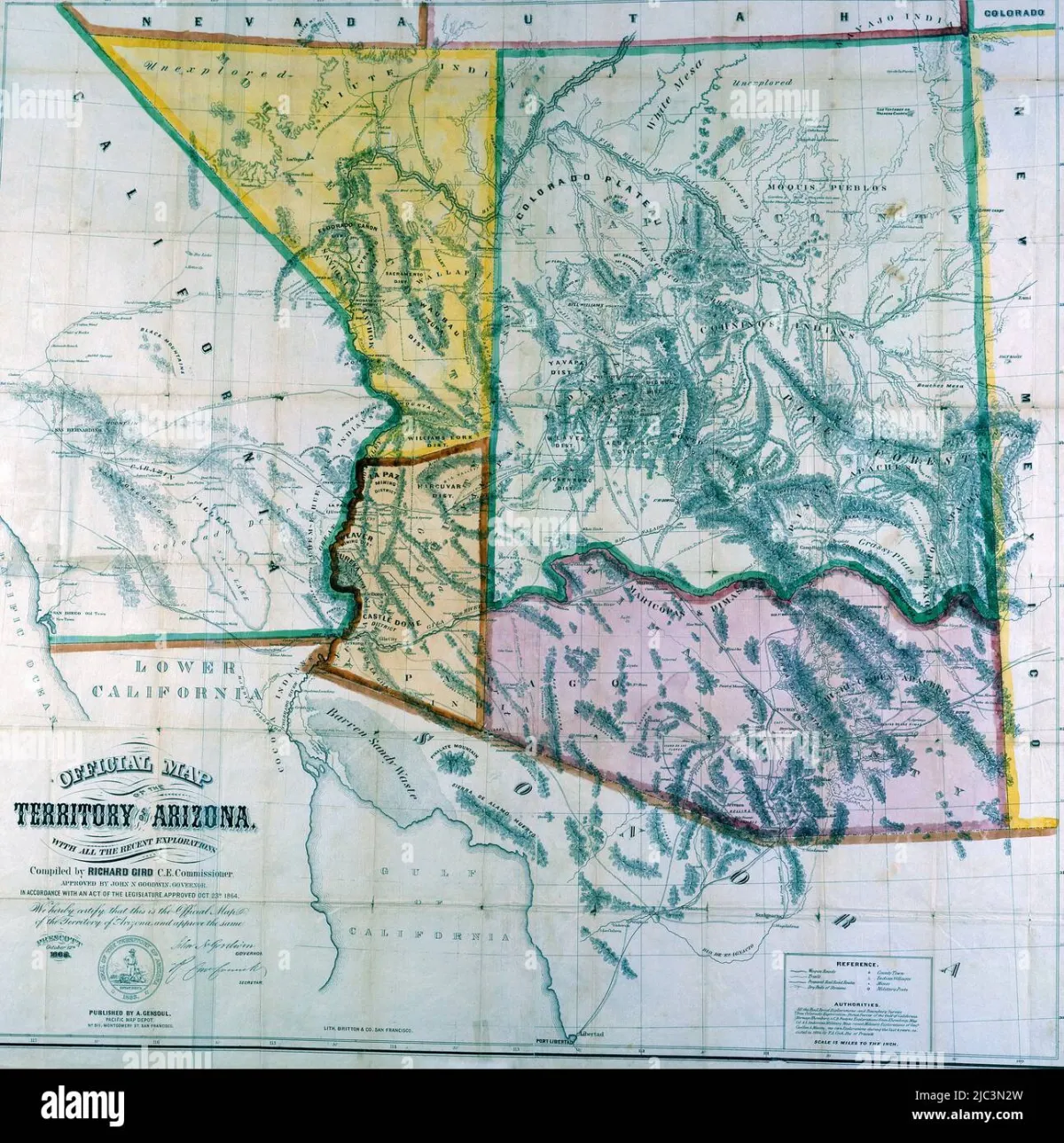 Photo: Arizona Territory, via c8.alamy.com
He decided they were mountains.
The Birth of a Phantom Range
Morse's official field report, submitted to the Census Bureau in September 1889, described "a previously unmapped mountain range extending approximately 47 miles northwest to southeast, with peaks ranging from 800 to 1,200 feet above the desert floor." He named it the "Morse Range" and included detailed sketches of supposed peaks, valleys, and geological formations.
The reality was far less dramatic. What Morse had documented was a scattered collection of weathered sandstone formations, none higher than 150 feet, spread across an area that would generously be called "slightly bumpy desert."
But Morse's report was thorough, his sketches were detailed, and his reputation was solid. The Census Bureau had no reason to question his findings.
Official Recognition of Nothing
The Morse Range made its debut on the 1890 Federal Territory Map of Arizona, printed by the U.S. Geological Survey. Cartographers in Washington drew it as a proper mountain range, complete with contour lines indicating peaks and valleys that existed only in Morse's imagination.
The phantom mountains quickly spread to other maps. Railroad companies planning routes through the territory marked the Morse Range as a geographical obstacle. Land speculators advertised "scenic mountain properties" in areas that were actually flat desert. Mining companies filed claims for mineral rights in "mountainous terrain" that consisted of scattered rocks.
Academic Authority
By 1895, the Morse Range had achieved the ultimate validation: inclusion in school textbooks. "Hartwell's Geography of the American West" featured a full-page illustration of the range, describing it as "a rugged barrier between the Sonoran Desert and the Colorado Plateau."
Thousands of American schoolchildren memorized the names of Morse's fictional peaks: Mount Franklin, Surveyor's Point, and Census Peak. Teachers used the range as an example of how western exploration was revealing the continent's hidden geographical treasures.
Professor James Whitman of Columbia University even wrote a scholarly paper titled "Geological Formation of the Morse Range: Evidence of Tertiary Volcanic Activity in the Arizona Territory." He based his entire analysis on Morse's original sketches and had never actually visited the area.
The Phantom's Long Life
For nearly thirty years, the Morse Range maintained its place in American geography. It appeared on maps, in textbooks, and in government documents. Travelers planning trips through Arizona would route around the non-existent mountains. Weather reports mentioned "mountain conditions" in areas where the biggest elevation change was an occasional anthill.
The fiction was so well-established that when a few travelers reported not seeing any mountains in the Morse Range area, mapmakers assumed they had taken wrong turns or were looking in the wrong direction.
Reality Crashes the Party
In 1918, a U.S. Geological Survey team led by Dr. Margaret Thornton was conducting a comprehensive mineral survey of the Arizona Territory in preparation for statehood. Their assignment included detailed geological analysis of the Morse Range.
 Photo: Dr. Margaret Thornton, via petersfraserdunlop.com
Thornton's team spent two days searching for mountains that should have been visible from twenty miles away. They found Morse's scattered rock formations—what locals called "the stone garden"—but no mountain range.
"We kept checking our maps and our compass," Thornton wrote in her official report. "According to our documentation, we should have been standing at the base of a 1,200-foot peak. Instead, we were looking at a pile of rocks that my horse could step over."
The Great Unmapping
Thornton's discovery triggered the most embarrassing cartographic correction in U.S. history. The Geological Survey quietly removed the Morse Range from federal maps in 1919, but the phantom mountains had already spread too widely to disappear quickly.
Textbook publishers had to issue corrections. Railroad companies revised their route maps. Land speculators faced lawsuits from buyers who had purchased "mountain property" that turned out to be desert.
The government's official statement was diplomatically vague: "Recent surveys have resulted in revised geographical classifications for certain features in the Arizona Territory."
Morse's Consolation Prize
Franklin Morse, who had retired from government service in 1905, learned about the correction through a newspaper article. He was reportedly "mortified" by the revelation but insisted he had documented what he genuinely believed to be a mountain range.
In a gesture that was either generous or mocking, the Geological Survey quietly named one of the area's actual rock formations "Morse Point"—a 127-foot sandstone outcropping that is legitimately the highest point in the region. It remains on maps today as the only surviving piece of Morse's geographical fiction.
The Legacy of Phantom Geography
The Morse Range scandal led to new verification procedures for geographical documentation. Survey teams were required to submit photographic evidence along with written reports. Cross-referencing became mandatory for any newly identified geographical features.
But Morse's phantom mountains proved how easily fiction can become accepted fact when it's wrapped in official documentation. For thirty years, an entire mountain range existed simply because one man said it did and everyone believed him.
When Reality Gets Mapped
Today, the area once known as the Morse Range is part of the Sonoran Desert National Monument. Visitors can see Morse Point and the scattered rock formations that inspired one man's geographical imagination. A small plaque marks the spot where America's most famous phantom mountains once stood—or rather, where they never stood at all.
Sometimes the most interesting discoveries are the ones that turn out not to exist. Franklin Morse may have been wrong about his mountains, but he was absolutely right about one thing: reality can be far stranger than anything we could possibly imagine.