The Chemistry Student Whose Lab Mistake Created Fashion History
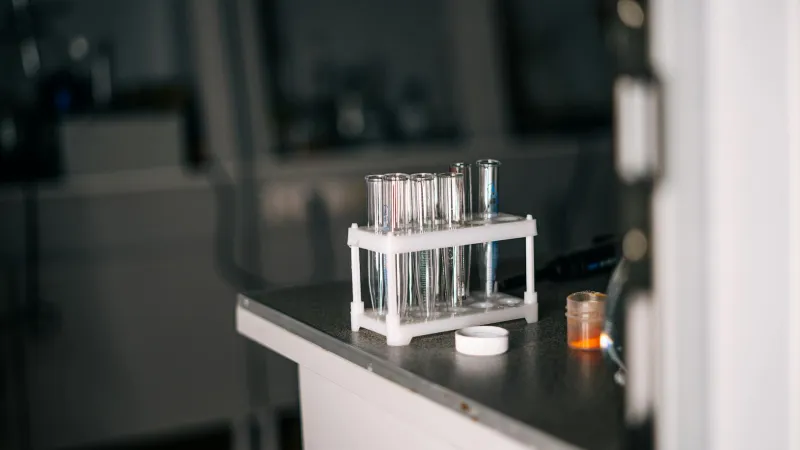
Picture this: You're eighteen years old, working alone in a makeshift laboratory in your parents' house, convinced you're about to cure one of the world's deadliest diseases. Instead, you end up accidentally inventing the color that will dress queens, bankrupt entire industries, and quietly rewrite the chemistry of the modern world.
That's exactly what happened to William Henry Perkin in 1856, and the story sounds so absurd that it reads like fiction.
The Teenager Who Thought He Could Cure Malaria
Perkin wasn't your typical college student. At just eighteen, he was already studying at London's Royal College of Chemistry under the famous German chemist August Wilhelm von Hofmann. But Perkin had bigger dreams than classroom experiments—he wanted to synthesize quinine, the only known treatment for malaria, which at the time was extracted exclusively from South American cinchona tree bark.
The British Empire desperately needed a reliable supply of quinine. Soldiers and colonists were dying from malaria across tropical territories, and the natural supply was both expensive and unreliable. If someone could create artificial quinine in a laboratory, they'd solve a massive public health crisis and probably make a fortune.
Perkin figured he was that someone.
Working in a crude laboratory set up in his family's London home during Easter break, Perkin began experimenting with coal tar—a black, sticky waste product from gas production that most people considered useless garbage. His plan was chemically ambitious: he would manipulate the molecular structure of aniline, a coal tar derivative, to create synthetic quinine.
When Everything Goes Spectacularly Wrong
What happened next is a perfect example of how the most important discoveries often come from the most spectacular failures.
Perkin's first attempt produced nothing but a reddish-brown sludge. His second try yielded an even less promising black precipitate. Any reasonable person would have given up, but Perkin decided to try once more with a different approach, using aniline sulfate and potassium dichromate.
The result? Another apparent disaster—a black, tarry mess at the bottom of his flask.
But here's where Perkin's curiosity saved the day. Instead of throwing away the failed experiment, he decided to clean his equipment with alcohol. When he added the alcohol to the black residue, something magical happened: the solution turned a brilliant, shimmering purple unlike any color anyone had ever seen before.
Perkin had accidentally created the world's first synthetic aniline dye.
The Purple That Changed Everything
What Perkin discovered in his bedroom laboratory was mauveine—named after the French word for the mallow flower. But this wasn't just any purple. Natural purple dyes were incredibly expensive because they came from sources like murex shells (which required thousands of shells for a tiny amount of dye) or certain insects and plants that were rare and difficult to process.
Suddenly, here was a purple that could be mass-produced from coal tar—industrial waste that was practically free.
Perkin immediately grasped the commercial potential. He sent samples to a Scottish textile firm, and their response was enthusiastic: they wanted as much of this new dye as he could produce. At eighteen, Perkin made a decision that would have seemed insane to most people—he dropped out of chemistry school, borrowed money from his father, and built a factory to manufacture his accidental discovery.
When Queen Victoria Wore Purple
The timing couldn't have been better. In 1856, synthetic dyes were unheard of, and the fashion world was hungry for new colors. When French fashion houses began using Perkin's mauveine, it created an international sensation. The color became so popular that the 1850s are sometimes called the "Mauve Decade."
The ultimate seal of approval came when Queen Victoria herself wore a mauveine-dyed silk gown to her daughter's wedding in 1858. Suddenly, purple wasn't just fashionable—it was royal. Everyone wanted to wear the color that had been born from a teenager's failed malaria experiment.
The Accidental Revolution
Perkin's mistake didn't just create a fashion trend—it accidentally launched the entire synthetic chemistry industry. His success inspired chemists around the world to start experimenting with coal tar derivatives, leading to the development of hundreds of new synthetic dyes, pharmaceuticals, and eventually plastics.
The natural dye industry, which had existed for thousands of years, collapsed almost overnight. Traditional dye sources like indigo plants, madder root, and cochineal insects couldn't compete with synthetic alternatives that were cheaper, more consistent, and often more vibrant.
By the time Perkin sold his dye works in 1874, he had become wealthy beyond his wildest dreams—all because he failed to make artificial quinine and was curious enough to investigate the "waste" product of his failure.
The Color of Modern Life
Today, virtually every colored object around you—from your clothes to your smartphone case—owes its existence to Perkin's accidental discovery. The synthetic chemistry industry he accidentally founded is now worth hundreds of billions of dollars globally.
And malaria? It's still a major global health threat, and we still haven't achieved Perkin's original goal of synthesizing quinine (though we have developed other effective treatments).
Sometimes the most important discoveries happen when you're looking for something completely different—and have the curiosity to pay attention when everything goes wrong.